White walls. Wrapped instruments. A machine.
Visual reassurance can show that equipment and supplies exist. It cannot reconstruct routine processing or establish that a specific package was safe to release.
A machine can be photographed. A clinic can look immaculate. Neither proves that the exact operating site is authorized or that every instrument follows a controlled path from contaminated return to safe release.
Patients see polished surfaces, sealed packages and a sterilizer. Verification asks who processed the device, where contamination traveled, which cycle was selected, what the monitors showed, who released the load and whether the package can be traced to care.
Visual reassurance can show that equipment and supplies exist. It cannot reconstruct routine processing or establish that a specific package was safe to release.
We do not ask, “Can the clinic show an autoclave?” We ask, “Can the clinic reconstruct how this instrument became safe for this patient?”
A professional credential belongs to a person. A facility record belongs to an entity and site. Neither record automatically proves the other, and a consultation address cannot stand in for the place where surgery is performed.
COFEPRIS states that establishments offering health services require the applicable sanitary authorization before beginning activities and identifies a sanitary-license route for facilities where surgical or obstetric procedures are performed. We match the legal operator, address and proposed activity—not merely the clinic name used online.
Open the COFEPRIS facility routeSISPRO describes REPS as the system where providers register the capacities and services enabled to serve patients. We compare the advertised clinic and physical site with the service and capacity relevant to the proposed care.
Open the REPS provider routeThe responsible entity, physical site and recorded authorization or enabled service at the time checked.
What it cannot prove aloneThat the named surgeon will operate there, that staff follow infection-control policy routinely, or that a particular instrument load was properly released.
WHO describes decontamination as a sequence extending from collection and receipt through processing, storage and distribution. The clinic’s demonstration must preserve those transitions. A missing transition is an evidence gap, not an editing detail.
Used devices move in a controlled container without exposing clean work, patients or staff.
Defined chemistry, contact time, manual or mechanical action and rinsing are demonstrated.
Cleanliness, integrity and function are checked before an item moves forward.
Compatible packaging and indicators preserve sterility and the trail back to processing.
Device instructions, load configuration and physical, chemical and biological monitoring are reconciled.
A responsible person interprets the evidence, rejects failures and protects released packages.
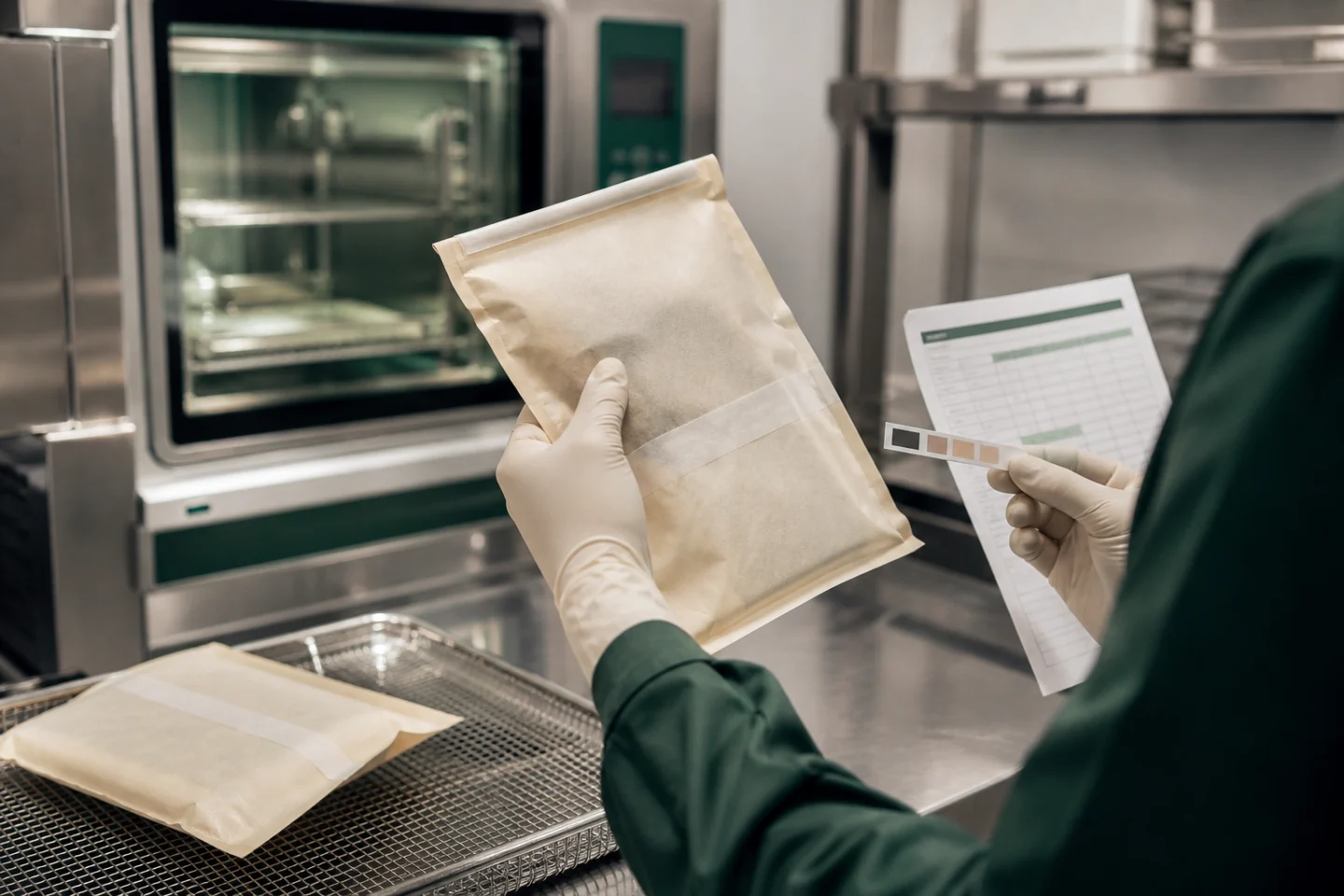
CDC guidance connects sterile-device delivery to unit design, decontamination, packaging, loading, monitoring, correct cycle selection and quality control. The reviewer therefore asks who interpreted the evidence, what would cause rejection and how that decision is recorded.
Read CDC sterilizing practicesThe reviewer chooses what must be followed, asks for transitions to remain visible and compares the performance with attributable records. The method tests whether policy, demonstration and sampled evidence tell the same story.
The clinic does not satisfy the standard by supplying only its strongest promotional clip or a policy selected in advance.
Editing, off-camera handoffs and exceptional setup are disclosed so the reviewer can state the real limitation.
Sampled documents are compared with the demonstrated process, equipment identity, responsible staff and dates.
This is an educational composite of recurring evidence gaps, not a report about one clinic or an allegation against an identifiable professional.
The material looked reassuring and showed that equipment existed. It did not identify the exact operating entity or preserve the instrument’s route into and out of processing.
Contaminated transport was off camera. Cleaning and inspection were described rather than performed. The package shown at the end could not be connected to the monitored load or a named release decision.
The evidence supports a narrow statement about the sterilizer demonstration. It does not support a broader claim that routine instruments are safely reprocessed or traceable to patient care.
A clinic is not failed for refusing to manufacture certainty. The public record simply keeps the conclusion inside the evidence: what was shown, what was missing and what would be required to close the gap.
Mark only evidence you have actually received or independently located. Your selections stay in this browser and are not sent to Verified Surgeons.
This tool organizes questions. It does not certify sterility, diagnose infection risk or establish legal compliance.
Start with the exact operating entity and address.
Use the printable checklist to record the exact facility, official source, proposed service, complete instrument pathway, release evidence and unresolved gaps before you schedule or pay.
A partial demonstration is reported as partial. Missing evidence is distinguished from an observed contradiction, and regulatory conclusions are reserved for competent authorities.
| Observed condition | Finding | Public wording |
|---|---|---|
| Facility record matches the entity, address and relevant service; the complete pathway and sampled records align. | Corroborated | Facility and reprocessing evidence corroborated for the scope and date reviewed. |
| The clinic shows a sterilizer cycle but omits cleaning, inspection, packaging, release or storage. | Limited | Sterilizer operation observed; complete reprocessing pathway not confirmed. |
| The official facility record identifies a different operator, address or relevant service. | Unresolved conflict | Facility-record mismatch identified; source, claimed site and check date shown. |
| Contaminated and clean workflows cross without a demonstrated control. | Material concern | Observed workflow separation requires clarification and corrective evidence. |
| Requested load, monitoring or release records are withheld or cannot be attributed. | Not provided | Routine implementation and traceability were not independently confirmed. |
| Policy, live demonstration and sampled records describe materially different practice. | Failed | Submitted evidence did not support the infection-control claim reviewed. |
The purpose of this standard is not to turn patients into inspectors. It is to stop a photograph, badge or single machine from carrying more weight than the evidence supports.
No. The machine is one component. Cleaning, inspection, packaging, correct processing, monitoring, release, storage and traceability remain separate links.
No. It can corroborate the entity, site and recorded service. Process performance requires separate demonstrations and attributable records.
No. Verified Surgeons tests and reports evidence within a stated scope. It does not license facilities, certify legal compliance or replace a regulator.
Send the practice details you already have. Your email is confirmed first. The request then becomes a private research file—not a complaint, endorsement or negative finding.
Facility records and reprocessing guidance answer different questions. The verification finding keeps those scopes separate.
Describes decontamination as a complex sequence from collection and receipt through processing, storage and distribution, with quality control at each stage.
Official recommendations covering cleaning, device classification, packaging, monitoring, storage and quality control.
Official information on sanitary authorization, including the license route for facilities where surgical or obstetric procedures are performed.
Official monthly information about enabled providers, services and relevant installed capacity.
Official provider-enrollment and service-enablement manual, including sterilization records and quality-control evidence where applicable.
Record what you have, preserve the gaps and let the evidence—not the sales surface—determine the next question.
Standard issued 8 August 2026 and reviewed 9 August 2026. Source links checked 8 August 2026. Educational verification methodology; not medical or legal advice. Material revisions update the visible review date.
Editorial record: Prepared by the Verified Surgeons research team. Technical, accessibility, and content review completed 31 July 2026. The stated scope, applicable sources, and limits remain visible on the page. A page is not medically reviewed unless a qualified reviewer is named on that page.